Trigger Point Therapy: Mechanisms, Clinical Evidence, and Applications in Modern Rehabilitation
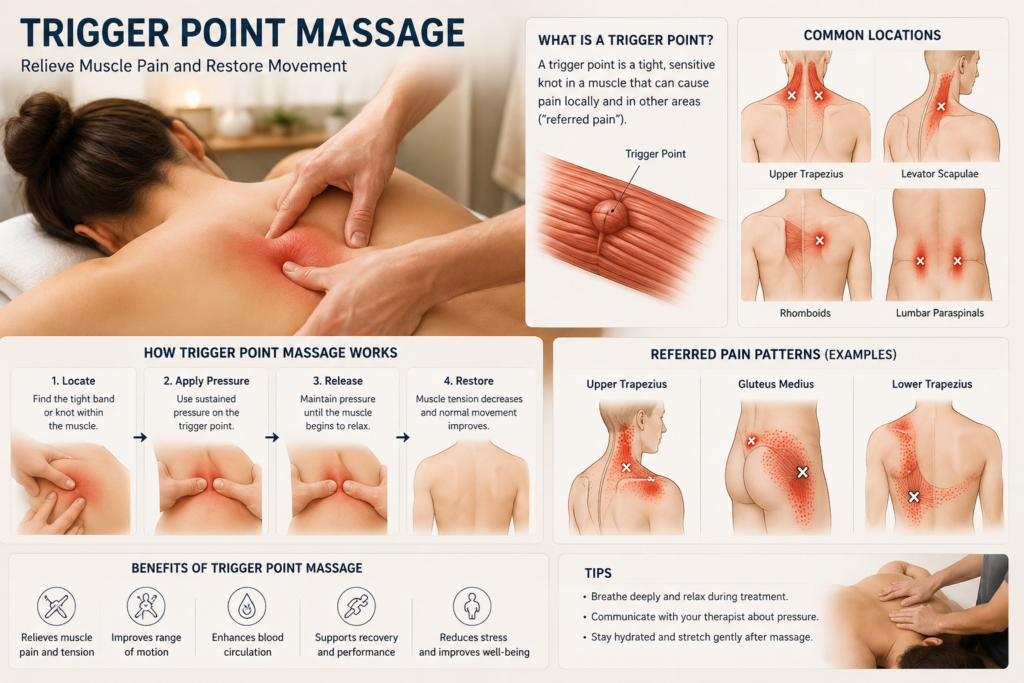
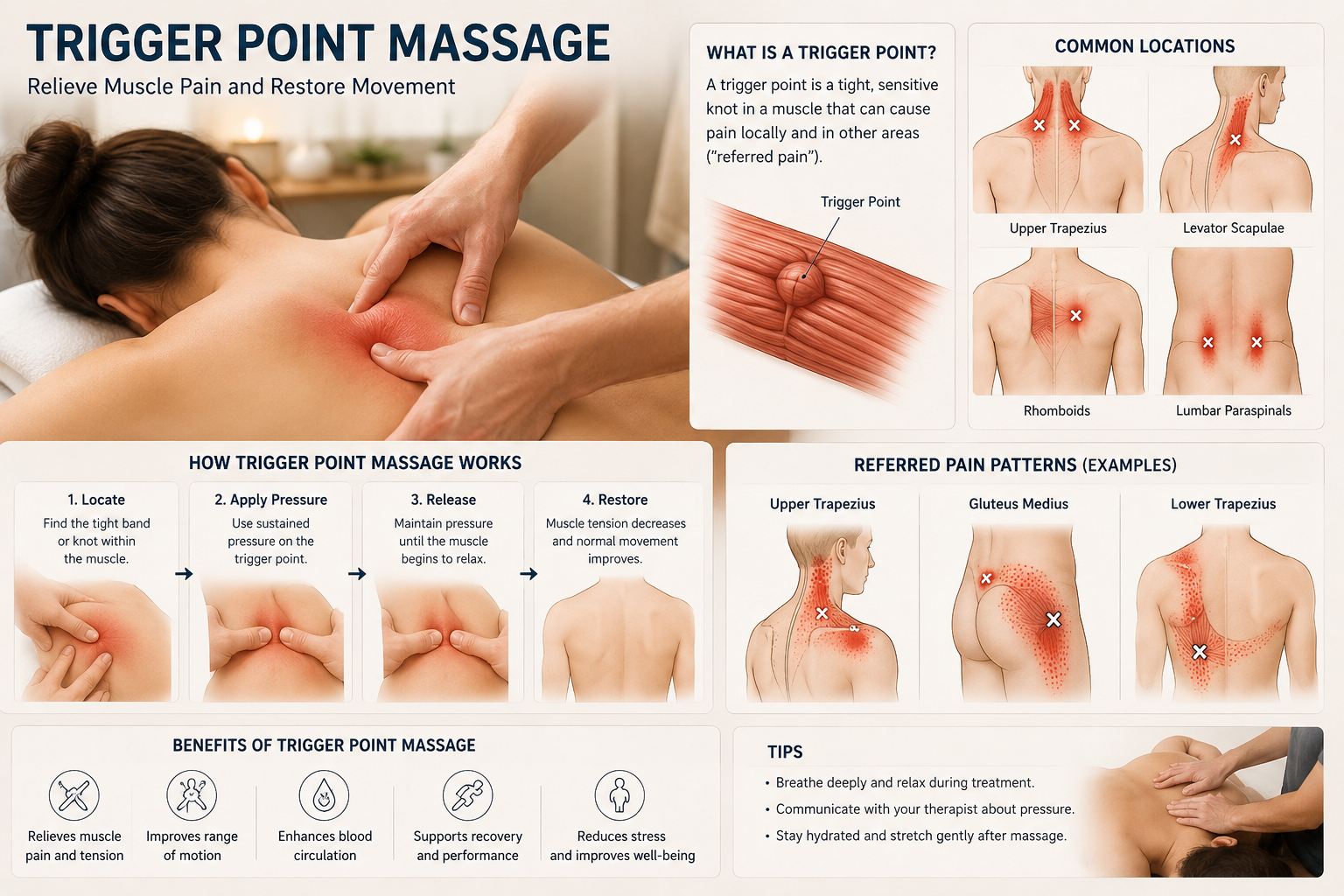
Trigger Point Therapy is one of the most widely utilized manual therapy techniques for treating musculoskeletal pain, movement dysfunction, and muscle tightness. It has become an important component of sports medicine, physical therapy, rehabilitation, and massage therapy due to its focus on identifying and treating myofascial trigger points.
Although Trigger Point Therapy has been practiced for decades, scientific research continues to investigate its physiological mechanisms and clinical effectiveness. Current evidence suggests that trigger point treatment may improve pain perception, joint mobility, muscle function, and overall quality of movement when incorporated into comprehensive rehabilitation programs.
Definition
A trigger point is defined as a hyperirritable spot located within a taut band of skeletal muscle or surrounding fascia. These points are often painful when compressed and may produce referred pain, muscle weakness, stiffness, or restricted movement.
Trigger points are generally classified into two categories:
Active Trigger Points
Active trigger points produce spontaneous pain without external stimulation. Pain may radiate to distant anatomical regions following predictable referral patterns.
Latent Trigger Points
Latent trigger points are not painful during normal activity but become tender when pressure is applied. They may contribute to reduced flexibility, altered muscle activation, and impaired movement quality.
Trigger Point Therapy involves applying sustained manual pressure, ischemic compression, stretching techniques, and soft tissue mobilization to reduce trigger point sensitivity and restore normal muscle function.
Proposed Mechanisms
Although the exact biological mechanisms remain under investigation, researchers have proposed several explanations for the effects of Trigger Point Therapy.
Neuromuscular Modulation
Sustained pressure may decrease abnormal motor endplate activity and reduce excessive muscle contraction within affected tissues.
Improved Local Circulation
Manual compression followed by tissue release may temporarily improve local blood flow, increasing oxygen delivery while assisting the removal of metabolic by-products.
Pain Modulation
Pressure applied to trigger points may activate descending pain inhibitory pathways within the central nervous system, reducing pain perception.
Improved Tissue Mobility
Reducing localized muscle tension may improve the interaction between muscles and fascia, contributing to greater movement efficiency.
Clinical Benefits
Current clinical research suggests several potential benefits of Trigger Point Therapy.
Reduction of Musculoskeletal Pain
Patients frequently report decreased neck pain, shoulder discomfort, lower back pain, and tension-related muscle soreness following treatment.
Increased Range of Motion
Improved muscle extensibility may allow greater joint mobility and more efficient movement patterns.
Enhanced Athletic Recovery
Athletes commonly receive Trigger Point Therapy following intensive training to reduce muscular tightness and support recovery before subsequent exercise sessions.
Improved Functional Movement
Reducing localized muscle restrictions may improve posture, coordination, and movement quality during daily activities and athletic performance.
Current Scientific Evidence
Numerous randomized controlled trials and systematic reviews have evaluated Trigger Point Therapy for various musculoskeletal conditions.
Research published in the Journal of Bodywork and Movement Therapies and other rehabilitation journals has demonstrated short-term improvements in pain intensity, pressure pain threshold, cervical mobility, and physical function among patients with myofascial pain syndrome.
Evidence suggests that Trigger Point Therapy is most effective when combined with therapeutic exercise, mobility training, patient education, and progressive rehabilitation rather than being used as a stand-alone intervention.
Researchers continue to investigate optimal treatment duration, pressure intensity, and frequency to maximize long-term clinical outcomes.
Current Clinical Applications
Trigger Point Therapy is routinely incorporated into modern rehabilitation and healthcare settings.
Common applications include:
• Sports medicine clinics
• Physical therapy practices
• Orthopedic rehabilitation centers
• Massage therapy clinics
• Chiropractic clinics
• Occupational health programs
• Chronic pain management clinics
• Athletic performance centers
Healthcare professionals frequently combine Trigger Point Therapy with Sports Massage, Myofascial Release, corrective exercise, flexibility training, and postural rehabilitation to improve patient outcomes.
Limitations and Future Research
Despite encouraging findings, Trigger Point Therapy continues to be an active area of scientific investigation.
Researchers acknowledge that trigger point diagnosis remains partly dependent on clinical examination, and standardized diagnostic criteria continue to evolve. Variations in treatment technique, therapist experience, and patient characteristics may also influence clinical outcomes.
Future research is expected to improve understanding of neuromuscular physiology, fascial biomechanics, and the long-term effectiveness of Trigger Point Therapy across different patient populations.
Professional Perspective
Current evidence supports Trigger Point Therapy as a valuable manual therapy technique for managing myofascial pain and improving functional movement. While it should not replace medical diagnosis or comprehensive rehabilitation, it may serve as an effective component of multidisciplinary treatment programs.
When delivered by qualified healthcare professionals and integrated with evidence-based rehabilitation strategies, Trigger Point Therapy can contribute to pain reduction, improved mobility, and enhanced quality of life.
About Sports Massage Association
Sports Massage Association is an educational platform dedicated to evidence-based sports massage, rehabilitation, anatomy, and musculoskeletal research.
Our editorial team develops educational content using peer-reviewed scientific literature, systematic reviews, and internationally recognized clinical guidelines. Articles are reviewed regularly to maintain scientific accuracy and reflect current developments in manual therapy and sports medicine.
References
- Travell JG, Simons DG. Myofascial Pain and Dysfunction: The Trigger Point Manual.
- Cummings TM, White AR. Needling therapies in the management of myofascial trigger point pain: A systematic review.
PubMed:
https://pubmed.ncbi.nlm.nih.gov/15927907/
- Fernández-de-las-Peñas C, Dommerholt J. Myofascial Trigger Points: Peripheral or Central Phenomenon?
PubMed:
https://pubmed.ncbi.nlm.nih.gov/21220601/
- National Library of Medicine (PubMed)
https://pubmed.ncbi.nlm.nih.gov
- Journal of Bodywork and Movement Therapies
https://www.sciencedirect.com/journal/journal-of-bodywork-and-movement-therapies